About

Portfolio

More

About

Portfolio

More

About

Portfolio

More

Hey there! My name is Alexandra.


I'm a Senior Product Designer with a frontend engineering background, based in Warsaw. I specialise in turning complex, data-heavy systems into interfaces that feel clear and efficient, with a track record across B2B SaaS, enterprise software, FinTech, and streaming platforms.


Over the past 10+ years I've worked across the full product lifecycle: from information architecture and UX research to design systems and frontend delivery. I bring a rare combination of design thinking and technical depth, which means I collaborate naturally with developers and build things that actually work.


I’m currently open to a new role.

Portfolio

Repositioning DataMola brand to support growth and attract a younger audience

A strategic IT company brand evolution from fragmented identity to a cohesive brand system, delivered under real business constraints, balancing recognition, growth, and long-term scalability.
Context

In 2020, DataMola launched an educational department aimed at junior developers and students. The company had solid technical expertise, but the visual identity didn't match where it was heading: a younger audience, more digital presence, bigger ambitions.

Problems

The existing brand had a few clear issues:

  • It didn't resonate with a younger, digital-first audience

  • It wasn't easy to recognize or read in online contexts

  • It didn't scale well across different touchpoints

Insight

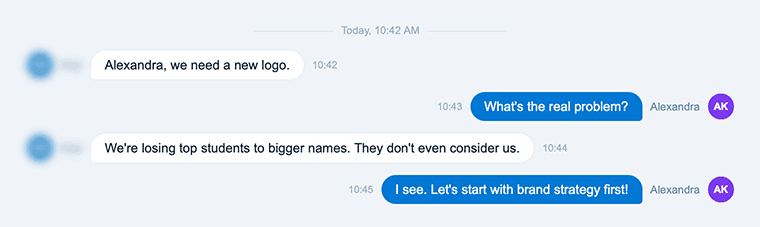
Research showed the existing logo was already strongly associated with the company. A full rebrand would mean losing that recognition, which is real business value.


The challenge wasn't to replace the brand. It was to evolve it without breaking what already worked.

Key decisions
  • Preserve brand equity through evolution, not replacement

  • Modernize form and color for digital use

  • Build a flexible logo system that works across contexts

  • Design for long-term relevance, not current trends

Brand system

The result was a modular brand system designed to be scalable, consistent, and usable across both digital and physical touchpoints: logo construction, submark logic (the windmill), light and dark variations, and a full color system.

My role

I was the only designer at the company. I owned the project fully: from brand strategy and visual direction to the logo system, brand guidelines, and stakeholder collaboration to ensure adoption.


I also designed and developed the company website, covering both the design and front-end implementation.

Outcome

Since 2020, the brand system has been in consistent use across the company's website, educational products, internal materials, and marketing. It supported both business growth and a clearer, more recognizable brand presence, without losing what people already recognized.

Vacation Memories UX. Making vacation memories live longer with everyday UX

A case study about applying UX thinking beyond client briefs — using behavioral design to solve a problem no app has quite figured out yet.

Context

This was a self-initiated project. It started with a simple personal observation — I wasn't revisiting my vacation photos. They sat in cloud storage and slowly faded.

Problem

A few things kept bothering me after trips:

  • I almost never went back to look at the photos

  • Telling friends about the vacation felt harder than expected — details and emotions were already blurry

  • Taking photos during the trip felt purposeless. I knew most of them would never be seen again

Early experiment

I first tried solving the sharing problem. During one trip, I documented the journey in real time inside a private Telegram channel: short notes, photos, videos. My family followed along and said it felt like they were traveling with us. When friends asked about the trip later, I just sent them the link.


It worked. But two problems remained: I still wasn't returning to my photos in everyday life, and taking pictures still didn't feel connected to anything meaningful.

Design challenge

How might I make vacation memories more accessible and desirable to revisit after the trip ends?

Insight

The issue wasn't missing photos. It was that revisiting them required deliberate effort, and anything that requires effort is easy to put off forever.

Constraints
  • No new app or tool

  • Has to fit into an existing daily habit

  • Minimal ongoing effort

  • Memories should surface without me looking for them

Hypothesis
  • Passive exposure could be more effective than active browsing, inspired by walls decorated with Polaroid photos

  • Fewer, more intentional photos could increase emotional value, similar to film photography versus unlimited digital galleries

  • A familiar interface could lower the barrier to recall, reusing an existing interaction rather than reinventing one

Approach

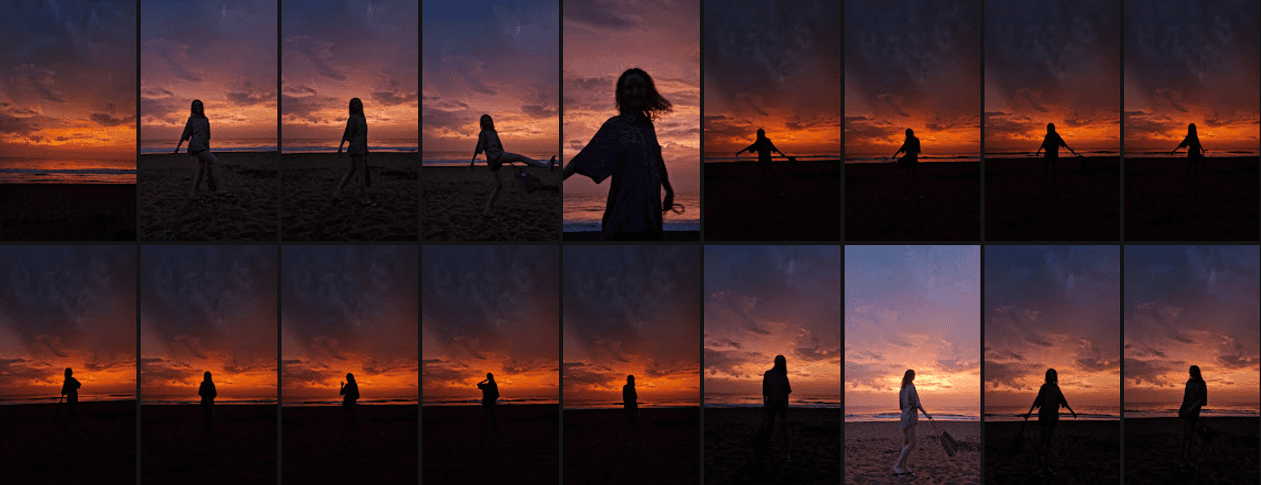
I started taking fewer, more intentional photos: paying attention to composition and color. After each trip, I'd select 10–15 images with real emotional weight and set them as rotating lock screen wallpapers.


Every time I unlocked my phone, a memory appeared.
No effort needed.

Outcome

By intentionally limiting the number of photos and integrating them into my lock screen, vacation moments became part of my everyday life rather than something stored away for "later." Each phone unlock acted as a subtle reminder of the trip: its atmosphere, emotions, and vibe, without requiring any conscious effort to revisit them. This passive exposure helped vacation memories stay emotionally present long after the trip ended.


An unexpected confirmation came from my husband. He rarely takes photos and almost never looks at them, but he kept commenting on my lock screen and asking me to share the images. He hadn't taken the photos, but he recognized the moments and connected with them emotionally.

15:16

Friday, Mar 27

15:16

Friday, Mar 27

Learnings
  • Less is more. Fewer photos made each one feel more valuable. A good reminder that design is about reduction, not accumulation.

  • Habits are powerful. Unlocking a phone is something people do dozens of times a day. Each unlock became a small moment of mood lift.

  • Passive exposure beats reminders. Photo apps already have "Memories" features, but they rely on algorithms and require interaction. A lock screen is always there, and always personal.

  • Designing for memory changed my behavior during the trip. I was more present, focused on moments I actually wanted to remember.

© Aliaksandra Karpava

NIP 5213993192

© Aliaksandra Karpava

NIP 5213993192